
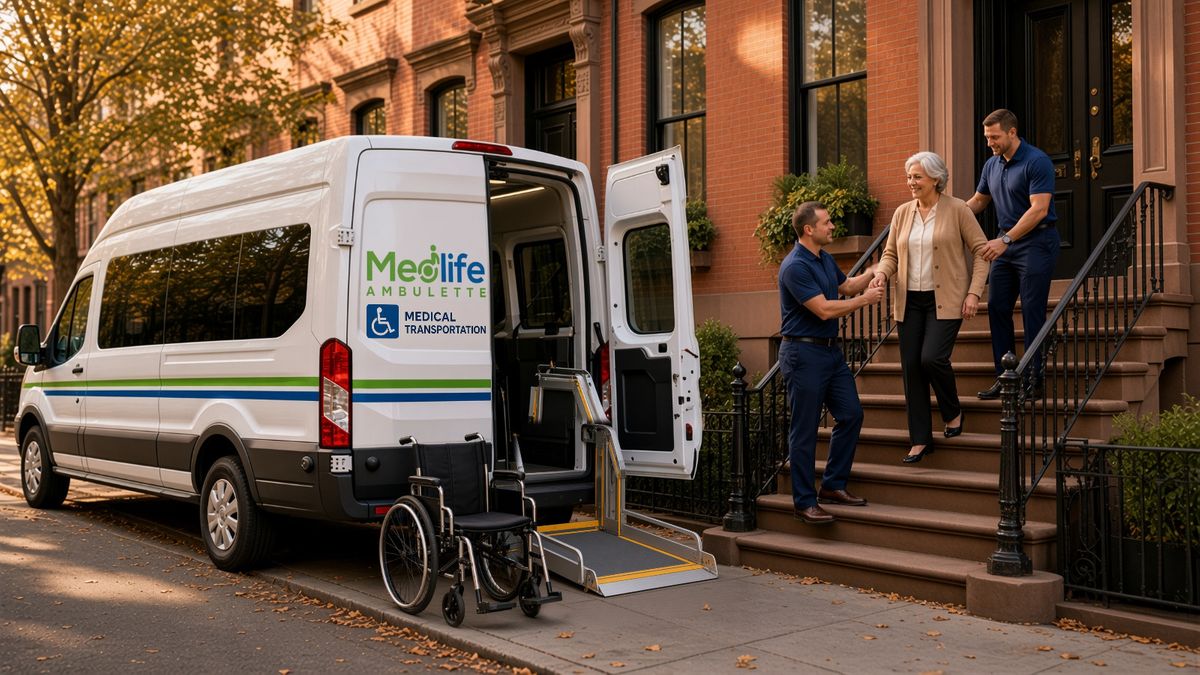
In New York, getting to an appointment often starts long before the car door. It starts at the top of a walk-up: two, three or four flights of narrow stairs, a front stoop and maybe a heavy building door at the bottom. For a parent or spouse who uses a wheelchair or isn't steady on their feet, those stairs can be the hardest part of the whole trip.
That's what two-person assistance is for. This guide from the MedLife Ambulette team in Queens walks you through how to book it when home has stairs: what to tell dispatch, how to get ready the day before and what the morning of the ride looks like.
When stairs are part of the trip
Many families don't think to mention stairs when they call. They describe the appointment, the address and the time, and the stairs come up only when the driver arrives. Saying it up front makes the day calmer for everyone.
Ask about two-person assistance if any of these sound like home:
- A walk-up building with no elevator, or an elevator that's often out of service
- A brownstone stoop or front steps between the door and the sidewalk
- A private house in Queens, Brooklyn or Long Island with steps at the entrance or inside
- A rider who needs more help than one person can comfortably give on stairs
With two-person assistance, two team members work together to help the rider on the stairs, and the help is customized to the rider's weight and specific needs. One more person on the stairs can make the whole trip feel steadier and more relaxed.
What to tell dispatch when you book
The more our dispatch team knows ahead of time, the better we can plan the ride. Have these details ready when you call.
About the home
- How many flights or steps, and whether there's an elevator
- Where the stairs are: inside the building, at the front stoop or both
- Which door to use, plus any buzzer, gate or lobby code
- Where a vehicle can stop: hydrants, bus stops, alternate-side parking or a busy avenue nearby
About the rider
- Whether they use a wheelchair, walker or cane, or walk with support
- Their approximate height and weight, so the help can be customized to them
- Anything that makes stairs harder, in your own words, so the team knows what to expect
About the trip
- The appointment time and address, and roughly when it should end
- Whether the destination has stairs too
- Whether a family member or caregiver will ride along
That last one matters: a caretaker or family member is welcome to ride along, and we recommend it.
Getting ready the day before
A little prep turns a stressful morning into a smooth one.
Clear the path
Walk the route from the rider's chair to the curb. Move rugs, shoes, boxes and anything stored on the landings. Turn on hallway and stairwell lights, and check that the handrail is clear.
Plan the wheelchair
If the rider has their own wheelchair, let us know when you book. If they need one, ask us: each of our vehicles carries a wheelchair with raised leg supports, and we may offer you a wheelchair at no additional cost if you require one.
Pack a small bag
Keep it light: ID, a Medicaid card if the rider has one, appointment paperwork, a phone and a sweater. Fewer things to carry means more hands free for the stairs.
On the day of the ride
Be ready a little early
Have the rider dressed, in sturdy, comfortable shoes and waiting near the door when it's time. If the building has a buzzer, keep your phone nearby in case the team needs to reach you.
Let the team lead on the stairs
Our team will help the rider down the stairs at a comfortable pace and help them into the vehicle. Our spacious wheelchair vans have electronic hydraulic lifts and modern tie-down fasteners, so the rider can stay seated in their wheelchair for the trip. The driver then accompanies them to their destination.
Plan the trip home, too
Stairs at home mean stairs at the end of the day as well. When you book, plan the return pick-up so two-person assistance is there for the trip back up. If you're booking a wheelchair ride for the first time, our checklist for booking wheelchair transportation covers the rest of what to have ready.
Why families in Queens and Brooklyn book with MedLife
Our approach is patient-centered: care, respect and professionalism on every ride. Our ADA-compliant ambulettes are inspected by NYSDOT every six months, and our drivers go through physical examinations by doctors and comprehensive safety training. Our dispatch system, Ambulette Fleet Tracking, keeps us in real-time communication, so we can focus on on-time, reliable pick-ups.
Families notice the difference. As Jenna M. put it after booking two-person assistance for her mother: "She loved their services and was all praises about them."
Still deciding what kind of ride you need? Our guide to ambulette vs. ambulance vs. rideshare can help. You can also learn more about our ambulette transportation.
Frequently asked questions
Do I need to mention stairs when I book?
Yes, please. Tell dispatch how many flights or steps there are, whether there's an elevator and where the stairs are, so we can plan two-person assistance for the trip.
Can a family member ride along?
Yes. A caretaker or family member may ride along. It isn't required, but we recommend it.
Do you accept Medicaid?
We accept both Medicaid and private pay for all your transportation needs.
Where do you offer two-person assistance?
We're based in Queens and travel through the boroughs of New York, including Brooklyn, as well as Long Island. We also have phone lines for New Jersey and Florida.
Book two-person assistance today
Tell us about the stairs, the rider and the appointment, and we'll help you plan the ride. Our phone lines are open 24/7.
- New York: (212) 225-8989
- New Jersey: (551) 235-8989
- Florida: (786) 539-0011
- Email: info@medlifeambulette.com
Or reach us through our contact page.
MedLife Ambulette provides non-emergency transportation. For emergencies, call 911.