
Blog
The MedLife Ambulette blog
Guides to non-emergency medical transportation
Practical advice on wheelchair transportation, two-man assistance, door-to-door service and airport rides, from the MedLife Ambulette team serving New York, New Jersey and Florida.


Latest articles
Tips for patients, families and caregivers planning a safe, comfortable ride.
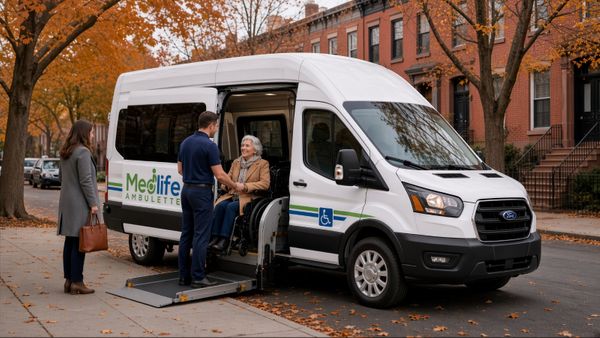
Wheelchair Van or Stretcher? How NYC Families Can Decide
When a parent needs help getting to an appointment, a hospital discharge or a rehab stay, the first question most families ask is "Can you send a wheelchair van?" Often that's exactly the right ride. Sometimes it isn't, and the time to find out is before the van pulls up, not at the bedside.
This guide from the MedLife Ambulette team explains how to choose between wheelchair transportation in NYC and a stretcher ride. It covers the one question that decides it, what each ride looks like, and what to ask the care team when you're not sure, for families in Queens, across the five boroughs and on Long Island.
The question that decides it: sitting up or lying down
Wheelchair transportation and stretcher transportation are built around one difference: how the rider travels.
- In a wheelchair van, the rider stays seated in a wheelchair for the whole trip.
- On a stretcher ride, the patient lies down for the whole trip, from bedside to bedside.
So the real question isn't "How far is the trip?" or "How much help do they need at the door?" It's "Can they sit upright, comfortably and safely, from pickup to drop-off?" If the answer is a clear yes, a wheelchair van is usually the fit. If it's no, or nobody is sure, it's worth a conversation before you book.
more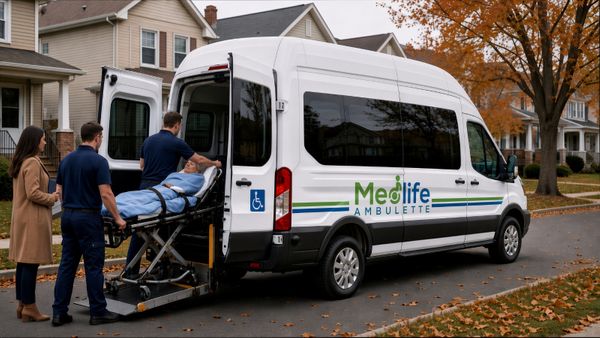
Planning a Stretcher Ride in NYC: Pickup, Return and Route
When a parent needs a stretcher ride, the date usually gets settled first: the discharge day, the specialist visit, the move to rehab. The times around that date are where the stress builds. When will the paperwork be done? Who is waiting at home? How does the trip back work after a long appointment?
This guide from the MedLife Ambulette team walks through how to plan pickup and return times for stretcher transportation in NYC, so both legs of the trip are settled before the day arrives. It covers hospital discharge rides, regular treatment schedules and facility transfers, with tips for families in Queens, across the five boroughs and on Long Island.
Why a stretcher ride takes more planning than a car ride
A stretcher ride is for someone who can't sit upright for the trip. That includes patients who are bedbound, recovering after surgery or an acute event, living with severe mobility limits or a high fall risk, or moving between a hospital, a skilled nursing facility, rehab and home.
The ride is bedside to bedside. Certified personnel trained in safe lifting and transfer move the patient, and the van uses a state-approved stretcher system with hydraulic loading and unloading and secure locking and restraints. That handoff happens at both ends, so it helps to plan each end on its own.
more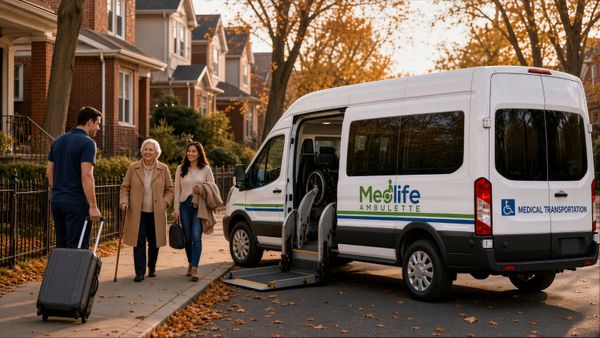
Flying Out of JFK or LaGuardia? Plan the Ride Around the Flight
When a parent has a flight out of JFK or LaGuardia, most of the planning goes into the trip itself: the tickets, the bags, who's meeting them on the other end. The ride to the airport tends to get booked last, often the night before, and that's usually when things start to feel rushed.
A calmer way to plan is to start with the flight and work backward. This guide from the MedLife Ambulette team shows how to plan airport transportation in NYC around the flight time, pick the ride that fits the traveler and set up the trip home before anyone leaves.
Start with the flight, then work backward
The flight time decides everything else, so put it down first and build the morning around it.
Your airline's check-in window
Every airline sets its own guidance for how early to arrive, and it can differ between domestic and international flights. Check it on the airline's site or your booking confirmation. If your parent will need help inside the terminal, ask the airline how to arrange that ahead of time.
The drive from home
Queens highways and the roads around both airports can back up quickly, especially on weekday mornings and holiday weekends. A pickup from Forest Hills and a pickup from Staten Island are very different trips. Leave room for traffic instead of counting on a clear road.
more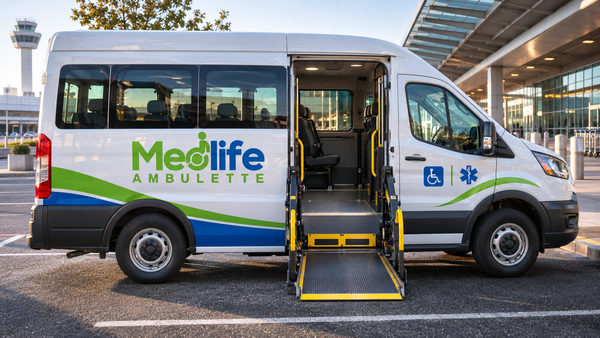
Booking a Wheelchair-Accessible Airport Ride from Queens
A flight reservation gives you a departure time. Booking the ride takes a different set of details: where the passenger will board, which wheelchair they use, who is traveling with them, and how the return pickup will work. For a trip from Queens or elsewhere in NYC, organize those details before calling dispatch.
This guide focuses on that booking conversation for JFK, LaGuardia or Newark. Ask dispatch to confirm your requested airport, route and date before making plans around the ride. A clear outbound plan and a separate return plan give everyone something specific to work from.
Start with the flight, then work backward
Keep the flight confirmation beside you when you call. MedLife’s ambulette service is designed for wheelchair-seated riders. Ask dispatch to confirm whether it can accommodate your requested airport trip, and have your flight details ready. Turn “I need an airport ride” into a concrete request by sharing:
- Airport name: JFK, LaGuardia or Newark, rather than simply “the airport.”
- Airline, flight number and travel date.
- Scheduled departure time, including whether it falls just after midnight.
- Terminal, if known, and whether the itinerary has changed.
- Pickup address, apartment or entrance details, and a reachable contact number.
- Number of passengers, wheelchair details and luggage count.
NYC Walk-Up Stairs? How to Book Two-Person Ambulette Help
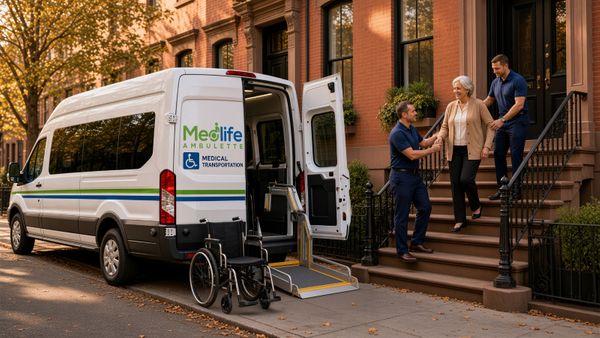
In New York, getting to an appointment often starts long before the car door. It starts at the top of a walk-up: two, three or four flights of narrow stairs, a front stoop and maybe a heavy building door at the bottom. For a parent or spouse who uses a wheelchair or isn't steady on their feet, those stairs can be the hardest part of the whole trip.
That's what two-person assistance is for. This guide from the MedLife Ambulette team in Queens walks you through how to book it when home has stairs: what to tell dispatch, how to get ready the day before and what the morning of the ride looks like.
When stairs are part of the trip
Many families don't think to mention stairs when they call. They describe the appointment, the address and the time, and the stairs come up only when the driver arrives. Saying it up front makes the day calmer for everyone.
Ask about two-person assistance if any of these sound like home:
- A walk-up building with no elevator, or an elevator that's often out of service
- A brownstone stoop or front steps between the door and the sidewalk
- A private house in Queens, Brooklyn or Long Island with steps at the entrance or inside
- A rider who needs more help than one person can comfortably give on stairs
Ambulette, Ambulance or Rideshare? How to Choose the Right Ride in NYC
When a loved one has a medical appointment and can't easily get into a car, the first question is often the simplest one: what kind of ride do we actually need? In New York City, families usually weigh three options: an ambulette, an ambulance or a regular car service or rideshare. Each one has a job. Choosing the right one saves stress, time and a lot of second-guessing on the morning of the appointment.
Here's a plain-language guide from the MedLife Ambulette team in Queens.
First, the most important rule
If it's an emergency, don't book a ride. Call 911. An ambulette is not an emergency service, and nothing in this guide replaces emergency care. If you're ever unsure whether a situation is an emergency, call 911.
What is an ambulette?
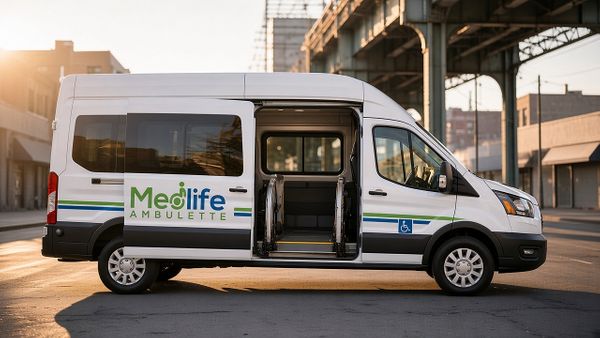
An ambulette is a wheelchair-accessible vehicle built for non-emergency medical transportation: getting people to and from scheduled medical appointments and other planned trips when a standard car isn't a good fit.
At MedLife Ambulette, that means:
- Spacious wheelchair vans that are well maintained, inspected regularly and equipped with essential medical equipment
- Drivers who are highly trained and hold the necessary certifications
- Help from the team, including two-man assistance when one person isn't enough
- Planning built in, from pick-up and return times to the best route
Wheelchair Transportation in Queens: What to Have Ready Before You Book
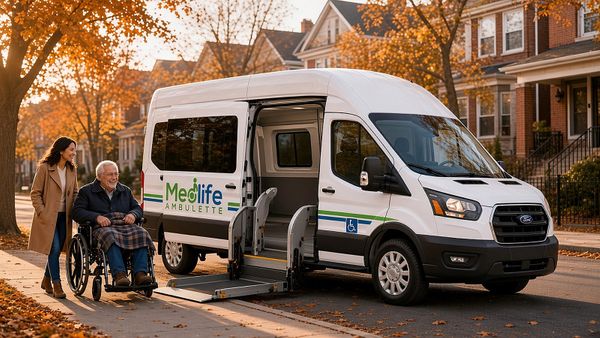
Booking a wheelchair ride for a parent, a spouse or yourself shouldn't feel like a project. Still, a few details make a real difference between a rushed morning and a calm one. At MedLife Ambulette, we're based right here in Queens, at 3050 Whitestone Expressway, and we've learned that the smoothest rides start with a five-minute phone call where the family has the right answers ready.
This checklist walks you through what to have on hand before you call, and how to get ready on the day of the ride.
Why a little preparation makes the ride easier
Every rider is different. One person transfers easily and only needs a hand at the curb. Another stays seated in a power chair the whole way. Some live in a walk-up on a narrow Queens block; others are in an elevator building with a busy front entrance. The more we know before the van arrives, the better our dispatch team can plan the right vehicle, the right timing and the right amount of help.
That's the heart of our patient-centered approach: care, respect and professionalism, starting before anyone steps outside.
Your wheelchair transportation booking checklist
more
The Road to Recovery: Medlife Ambulette's Role in Non-Emergency Medical Transportation
In the complex landscape of healthcare, access to medical services is a fundamental component of patient outcomes. From outpatient treatments to recurring therapy sessions, non-emergency medical transportation is a lifeline for individuals on their road to recovery. With Medlife Ambulette, our team is here to help ensure our clients reach their appointments safely and on time. Keep reading to learn more about how non-emergency medical transport plays a crucial role in the recovery process!
more
The Science of Securing Wheelchairs: Medlife Ambulette's Best Practices
At Medlife Ambulette, the safety and comfort of our passengers are our highest priorities, especially when it comes to wheelchair transportation services. The proper securing of wheelchairs is essential to ensure a safe journey for those who rely on disability transportation services. Our team is dedicated to implementing best practices in wheelchair safety to enhance every trip.
more
Medlife Ambulette's Specialized Fleet: Ensuring Safe and Comfortable Journeys
At Medlife Ambulette, we understand that transportation for healthcare appointments should be more than just a ride; it should be a seamless experience tailored to meet individual needs. Our specialized fleet is designed to provide safe and comfortable journeys, ensuring that our clients receive the highest level of care during transit. Whether you require handicapped transportation services or medicaid transportation, we are here to serve you.
moreNeed a ride to an appointment?
Safe and reliable non-emergency medical transportation for you and your loved ones.
Request a Ride