
When a parent needs a stretcher ride, the date usually gets settled first: the discharge day, the specialist visit, the move to rehab. The times around that date are where the stress builds. When will the paperwork be done? Who is waiting at home? How does the trip back work after a long appointment?
This guide from the MedLife Ambulette team walks through how to plan pickup and return times for stretcher transportation in NYC, so both legs of the trip are settled before the day arrives. It covers hospital discharge rides, regular treatment schedules and facility transfers, with tips for families in Queens, across the five boroughs and on Long Island.
Why a stretcher ride takes more planning than a car ride
A stretcher ride is for someone who can't sit upright for the trip. That includes patients who are bedbound, recovering after surgery or an acute event, living with severe mobility limits or a high fall risk, or moving between a hospital, a skilled nursing facility, rehab and home.
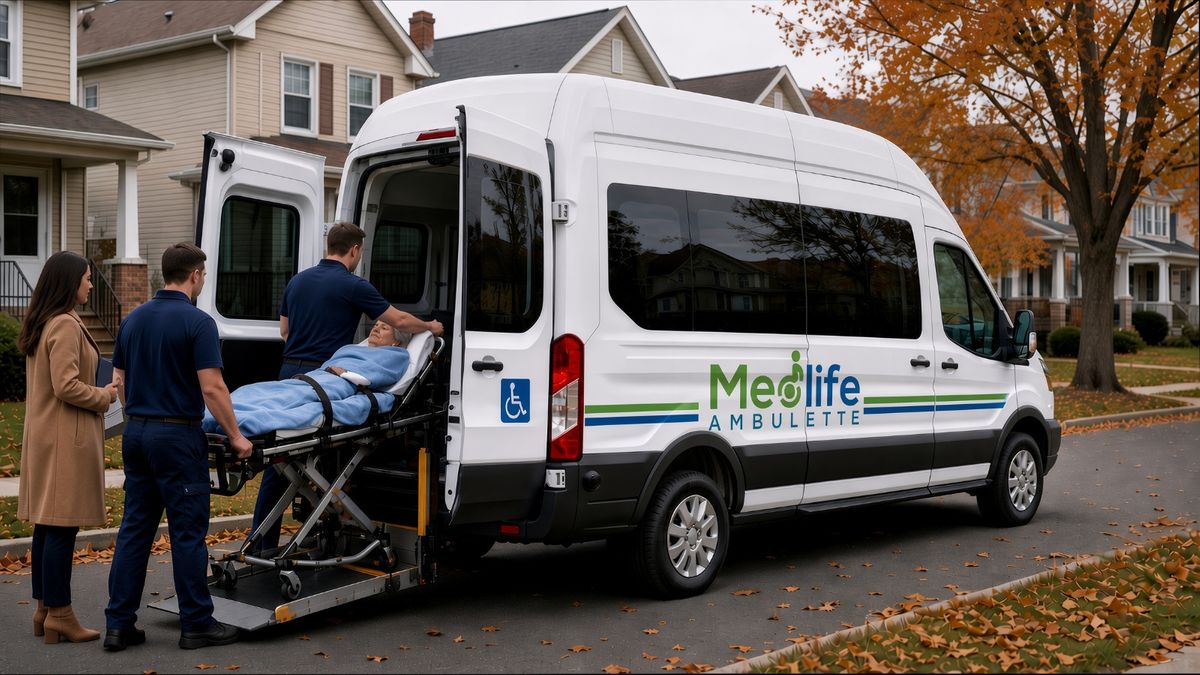
The ride is bedside to bedside. Certified personnel trained in safe lifting and transfer move the patient, and the van uses a state-approved stretcher system with hydraulic loading and unloading and secure locking and restraints. That handoff happens at both ends, so it helps to plan each end on its own.
Plan the pickup around the people at each end
For a hospital discharge
Discharge times can shift during the day. Before you book, ask the discharge planner or case manager when the patient is expected to be ready, and who the crew should check in with on the unit. On the stretcher side, MedLife coordinates bedside-to-bedside help with facility staff, and works with hospitals, discharge planners and case managers.
Then think about home. Someone should be there to open the door, and the bed or recliner the patient is going to should be ready before the van arrives.
For a facility transfer
A move from a hospital to rehab, or from a nursing home back home, has two sets of staff involved. Share the name of the unit or contact at each facility when you call, so the pickup and the arrival can both be lined up with the people who will be there.
For a pickup from home
If the patient is starting from home, picture the path from the bed to the front door. A clear hallway, a propped door and a note about elevators or steps help the crew plan the move from the bedside. Mention anything unusual about the building when you book.
Book the return time in the same call
The ride home is the easiest part to forget. A long appointment ends, the patient is tired, and that's not the moment to start making calls.
At MedLife Ambulette, pickup and return times are planned ahead, with the route mapped. When you book, share the appointment start time and the best estimate you have for when it will end. If the office can't give you an end time, ask what's typical for that visit, and tell us. If the plan changes on the day, call us. Our dispatch system, Ambulette Fleet Tracking, keeps dispatch and our crews in real-time communication.
Regular treatment schedules
Dialysis, physical therapy and other treatments
Some rides happen every week. MedLife's ambulette service is set up for riders on a regular dialysis, physical therapy or treatment schedule, and our stretcher team coordinates with dialysis and long-term care teams. Stretcher rides can be booked by phone or online, ahead of time.
For facilities and agencies
Riders and families book single trips. Facilities and agencies can set up recurring service, with pickup and return times planned ahead.
Let us map the route
You don't need to plan the route yourself. Pickup and return times are planned ahead, with the route mapped, whether the trip runs across Queens, from Brooklyn into Manhattan, or to and from Long Island. We serve Manhattan, Brooklyn, Queens, the Bronx and Staten Island, and our medical rides reach Long Island too.
What helps us is detail: the exact pickup address and entrance, the destination's entrance and unit, and the times that matter at each end. On board, our stretcher vans have climate control and secure locking and restraints, and equipment is sanitized before every trip.
What to have ready when you call
- The patient's name and both addresses, with the entrance, unit or room number
- The date, the time they need to arrive, and the expected end time
- How the patient needs to travel, lying down for the whole trip or able to sit in a wheelchair. Our dispatch team confirms clinical and mobility needs in advance
- Who's riding along. A family member can usually ride along. Tell us when you book so we can plan the seating
- How you're paying. We accept both Medicaid and private pay
If your parent can sit up safely in their own wheelchair, an ambulette ride in a wheelchair van with a hydraulic lift and tie-downs may be the better fit. You can see all of our rides on the services page.
Frequently asked questions
Can I book the pickup and the return ride at the same time?
Yes. Pickup and return times are planned ahead, with the route mapped, so both legs can be set in one call.
Who is stretcher transportation for?
It's for patients who can't sit upright, are bedbound, are recovering after surgery or an acute event, have severe mobility limits or a high fall risk, or need a transfer between a hospital, a skilled nursing facility, rehab and home.
Can a family member ride along?
Usually, yes. Tell us when you book so we can plan the seating.
Can a facility set up recurring rides?
Yes. Facilities and agencies can set up recurring service. Riders and families book single trips.
Is MedLife Ambulette an emergency service?
No. MedLife provides non-emergency transportation. For a medical emergency, call 911.
Plan your stretcher ride
Have the appointment or discharge details ready and give us a call. Our line is open 24/7, and we'll plan the pickup and the ride home together.
New York: (212) 225-8989
We also have phone lines for New Jersey, (551) 235-8989, and Florida, (786) 539-0011. You can also reach us through our contact page.